



































































































































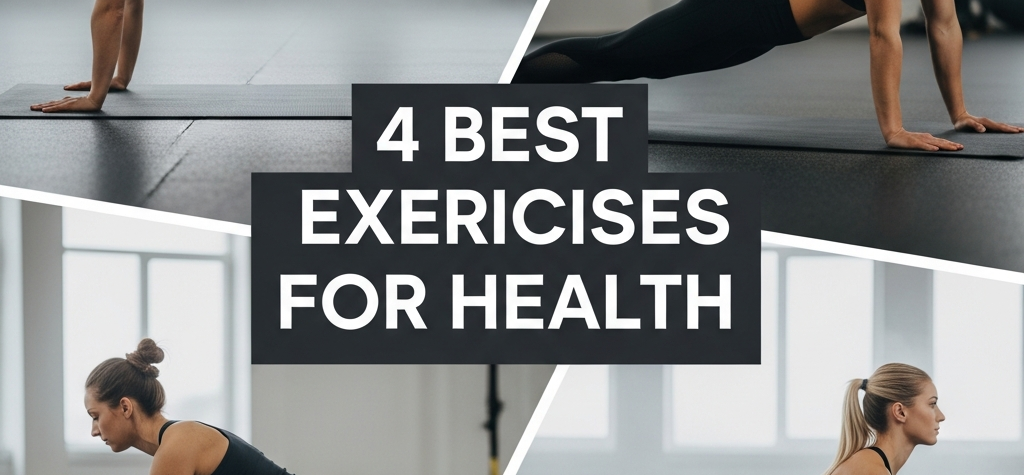
4 Best Exercises for Health
Author: RVLNSV PRASAD
Updated On: August 2026
Author Note
This article was written by RVLNSV PRASAD to provide practical, easy-to-understand information about accessible exercises for general health and fitness. It focuses on activities such as walking, strength training, yoga, and swimming that can be adapted to different fitness levels and lifestyles.
Introduction
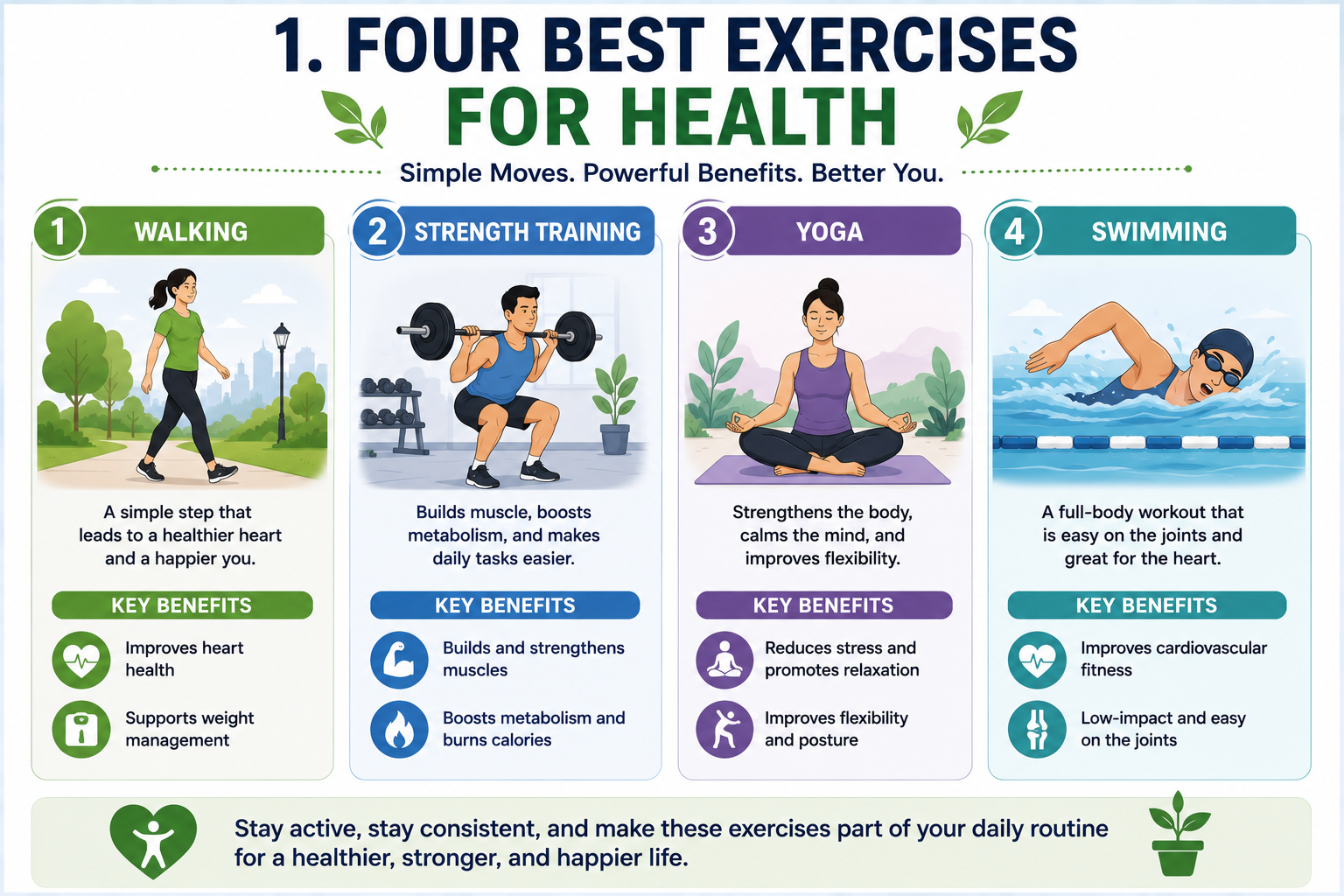
Walking is simple, accessible, and easy to include in many daily routines, yet it can provide meaningful health benefits. Regular walking can support cardiovascular fitness, strengthen the lower body, improve balance, and contribute to mental well-being. The CDC physical activity guidelines recognize walking as a practical form of moderate-intensity physical activity, while Harvard Health’s walking guidance highlights its value as an accessible form of exercise. You do not need expensive equipment or a gym; a comfortable pair of shoes and a suitable place to walk may be enough to get started.
Health Benefits of Walking
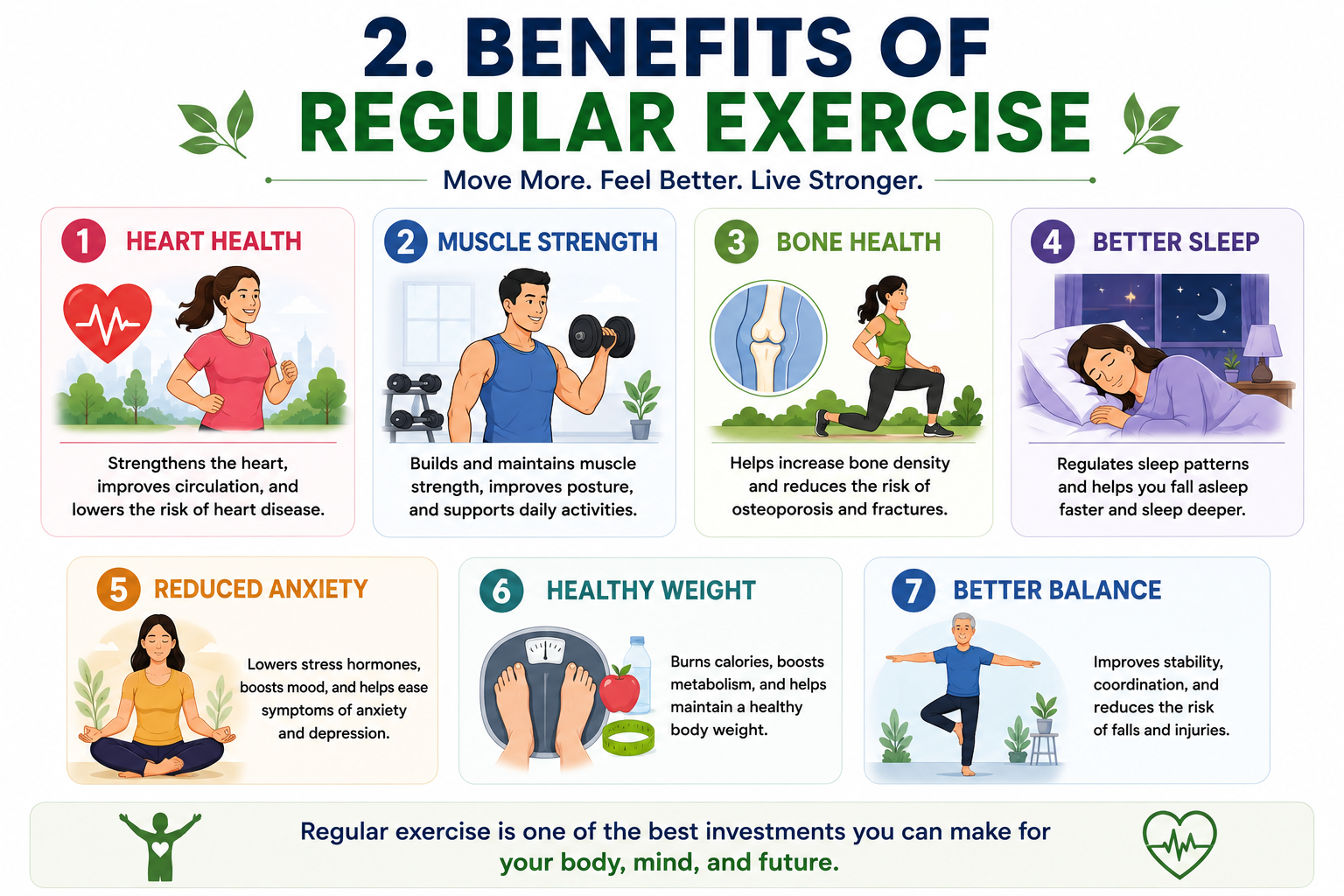
Walking regularly can help:
- Support heart health
- Help manage blood pressure
- Support healthy digestion
- Reduce stress and improve mood
- Strengthen leg muscles
- Improve balance and mobility
A Real-Life Example
My neighbor Ravi changed his routine through regular walking. He was 52 years old and had been concerned about his health, so he decided to start with a simple 20-minute walk each morning. He began at a comfortable pace and gradually increased his distance and speed. Over time, walking became a consistent part of his routine, and he reported improvements in his weight and blood pressure. His experience shows how a simple activity can become a sustainable part of an active lifestyle. However, one person’s experience does not prove that walking will produce the same results for everyone.
How to Start Walking
Try this gradual plan:
- Week 1: Walk for 10 minutes daily.
- Week 2: Increase to about 20 minutes daily.
- Week 3: Aim for about 30 minutes daily if comfortable.
- Gradually increase your pace or duration as your fitness improves.
Consistency is more important than trying to walk as fast or as far as possible from the beginning. Choose a pace and duration that are appropriate for your current fitness level.
2. Strength Training – Build Muscle and Support Physical Function
Why Strength Training Is an Effective Exercise for Health
Strength training is sometimes misunderstood as an activity only for bodybuilders, but it can be useful for people of different ages and fitness levels. Regular resistance exercise can help maintain muscle strength, support bone health, and make everyday movements easier. As people age, maintaining muscle and physical function becomes increasingly important. The Mayo Clinic guide to strength training explains how resistance exercise can support strength, muscle mass, and overall fitness.
Benefits of Strength Training
Strength training can help:
- Increase muscle strength
- Support healthy body composition
- Support bone health
- Improve physical function
- Improve posture and stability
- Make everyday activities easier
Even relatively light resistance can be useful when the exercises are appropriate for your fitness level and performed with controlled technique.
My Personal Experience
I once focused mainly on cardio and paid less attention to strength training. When I continued experiencing back discomfort, a physiotherapist suggested that I include simple strengthening exercises in my routine. The exercises included squats, push-ups, and planks, which I performed regularly. Over time, I felt stronger and noticed improvements in my posture and daily movement.
This was my personal experience and should not be considered evidence that the same exercises will produce the same results for everyone. Persistent or significant pain should be evaluated by an appropriate healthcare professional.
Simple Strength Exercises
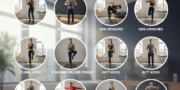
You do not necessarily need a gym to begin resistance training. Depending on your fitness level, you can try:
- Squats or chair squats
- Push-ups or wall push-ups
- Wall sits
- Planks
- Resistance-band exercises
Start gradually, focus on controlled technique, and allow adequate recovery between sessions. The American Heart Association’s physical activity recommendations also include muscle-strengthening activity as part of a balanced physical-activity routine.
3. Yoga – Balance for Body and Mind
Why Yoga Is an Effective Exercise for Health
Yoga has been practiced for thousands of years and combines physical postures, breathing techniques, and mindful movement. Research suggests that yoga may support flexibility, balance, strength, stress management, and overall well-being. It is not only a form of physical activity but can also encourage relaxation and mental focus. Johns Hopkins Medicine also recognizes yoga as a useful form of physical activity that can complement a balanced exercise routine.
Benefits of Yoga
Yoga can help:
- Reduce stress
- Improve flexibility
- Support balance
- Improve body awareness
- Support mobility
- Encourage relaxation and mental focus
Some people may also find yoga helpful for managing certain types of back or neck discomfort, although the appropriate exercises depend on the individual.
A Real Example
A friend of mine works in software development and spends long hours at a computer. He experienced recurring neck discomfort and decided to try a short daily yoga routine. He began with gentle stretches and breathing exercises for about 15 minutes each day. Over the following weeks, he reported feeling more comfortable and calmer while working.
This is a personal experience and does not establish that yoga will relieve pain for everyone. Persistent or severe pain should be assessed by a qualified healthcare professional.
Beginner Yoga Poses
You can start with simple poses such as
- Child’s Pose
- Cat-Cow Stretch
- Downward-Facing Dog
- Mountain Pose
- Seated Forward Bend
Practice slowly and focus on comfortable movement and controlled breathing. Beginners should avoid forcing a stretch or pushing through pain. Even a short, consistent practice can be a practical way to include more movement in your daily routine.
4. Swimming – A Full-Body Exercise
Why Swimming Is an Effective Exercise for Health
Swimming is a low-impact activity that works many of the body’s major muscle groups while providing cardiovascular exercise. Because the water supports part of your body weight, swimming can place less impact on the joints than some land-based activities. This can make it a useful option for people who prefer lower-impact exercise, although individual suitability varies.
Benefits of Swimming
Swimming can help:
- Support heart health
- Strengthen muscles
- Improve cardiovascular endurance
- Reduce impact on the joints
- Improve overall physical fitness
Swimming can also be an enjoyable way to stay active, particularly during warm weather.
Personal Observation
During a family vacation, I tried swimming for about 30 minutes each morning. After a week, I felt more energetic and noticed that I was sleeping better. Swimming felt gentle on my body while still providing a full-body workout. This was my personal experience, and individual results can vary depending on fitness level, swimming ability, sleep, and other lifestyle factors.
Tips for Beginners
If you are new to swimming:
- Start with about 10 minutes at a comfortable pace.
- Increase the duration gradually as your fitness improves.
- Practice breathing techniques without rushing.
- Take breaks when needed.
- Always swim in a safe, supervised location when appropriate.
- If you are not confident in the water, consider learning from a qualified swimming instructor.
How to Create an Exercise Habit
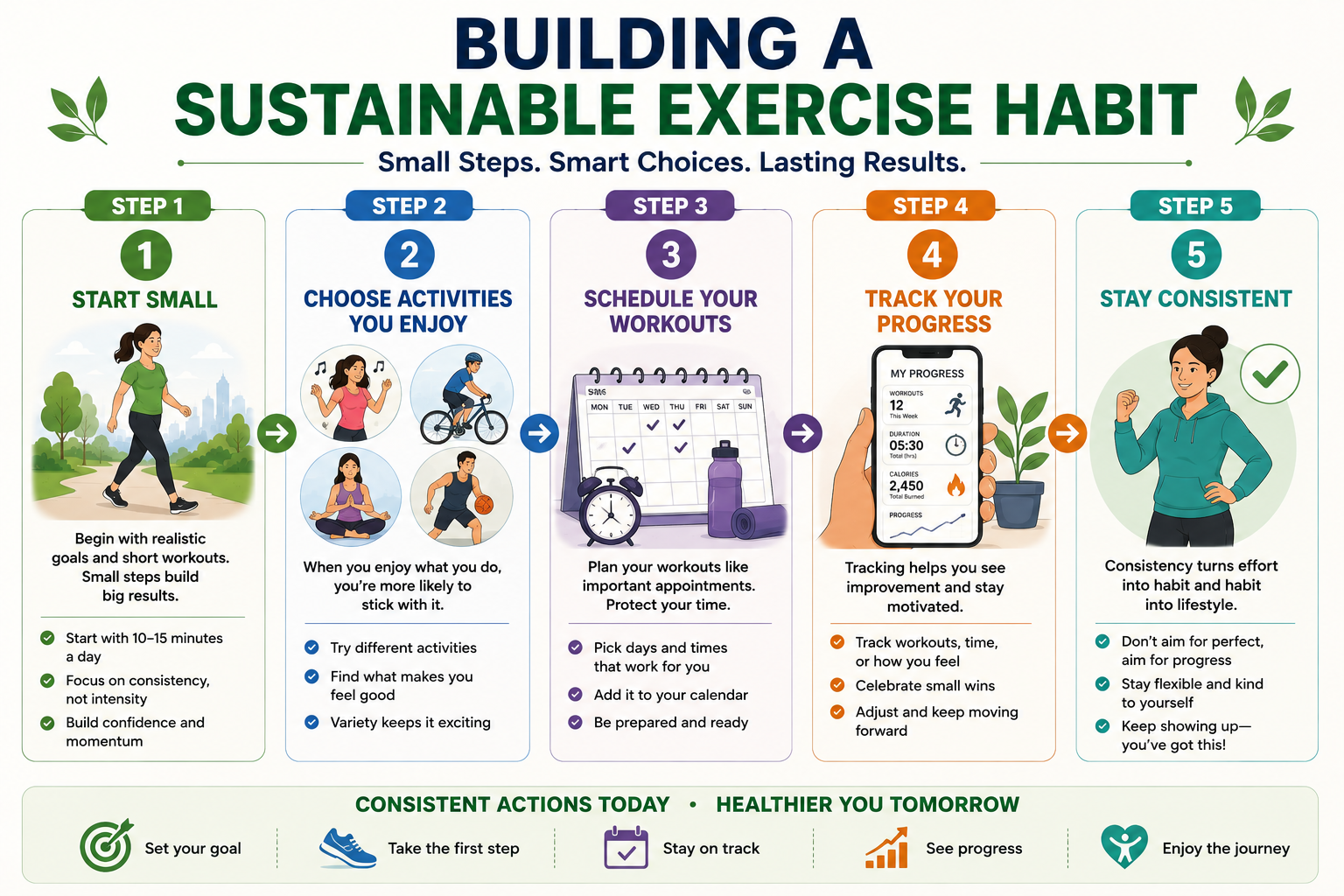
Building a regular exercise habit can sometimes be more challenging than the exercise itself. The key is to make physical activity simple, enjoyable, and realistic enough to continue over time.
Start Small
Avoid beginning with hour-long workouts. Start with about 10 minutes and gradually increase the duration as your fitness and confidence improve.
Choose Enjoyable Activities
You are more likely to stay active when you enjoy the activity. If you do not like running, consider alternatives such as walking, swimming, cycling, or yoga.
Schedule Exercise
Treat exercise as an important part of your day. Adding your workout to your calendar can make it easier to remember and turn it into a regular routine.
Track Your Progress
Recording your workouts can help you see your progress and provide motivation to continue. You can track activities such as walking time, workout frequency, or improvements in strength.
Find a Partner
Exercising with a friend or family member can make physical activity more enjoyable and provide accountability, which may help you maintain your routine.
Simple Beginner Exercise Plan
| Day | Suggested Activity | Beginner Goal |
|---|---|---|
| Monday | Walking | 15–20 minutes |
| Tuesday | Strength training | Short beginner session |
| Wednesday | Walking or gentle yoga | 15–30 minutes |
| Thursday | Rest or light movement | Recovery |
| Friday | Strength training | Short beginner session |
| Saturday | Swimming or walking | Comfortable activity |
| Sunday | Rest or gentle stretching | Recovery |
Note: This is only an example. Beginners should adjust the frequency, duration, and intensity according to their fitness level, health status, recovery, and personal preferences. Start gradually rather than trying to complete the entire schedule immediately.
My Honest Opinion About Fitness Culture
Many fitness influencers can make exercise appear more complicated than it needs to be by promoting extreme workouts, strict diets, or expensive equipment. In reality, building a healthy lifestyle can be much simpler and more sustainable. Practical forms of exercise include:
- Walking
- Stretching
- Strength training
- Swimming
These activities can support different aspects of physical fitness and can be adapted to individual abilities and preferences. The most effective exercise routine is not necessarily the most intense one; it is one that you can perform safely and consistently. The Physical Activity Guidelines for Americans recommend a combination of aerobic and muscle-strengthening activities and emphasize that even people who are less active can benefit from increasing their activity. Fitness does not have to be complicated to be useful—it needs to fit your lifestyle and be maintained over time.
Frequently Asked Questions
1. What are the best exercises for health for beginners?
The best exercises for health for beginners include walking, yoga, swimming, and simple bodyweight exercises. These activities can be adapted to different fitness levels and provide an accessible way to begin regular physical activity.
2. How often should beginners exercise?
The ideal frequency depends on your fitness level, goals, and the type of activity you choose. A useful starting point is to include regular movement throughout the week and gradually build toward recommended levels of aerobic and muscle-strengthening activity.
3. Are these exercises suitable for older adults?
Many activities, including walking, swimming, and appropriately modified yoga or strength exercises, can be suitable for older adults. The right choice depends on individual mobility, fitness, health conditions, and previous exercise experience.
4. Do I need a gym to improve my fitness?
No. Many effective activities require little or no equipment. Walking, bodyweight exercises, stretching, and some forms of yoga can be performed at home or outdoors, depending on your circumstances.
5. Can regular exercise help with weight loss?
Regular physical activity can contribute to weight management by increasing energy expenditure and supporting muscle health. Combining exercise with a balanced eating pattern can be more effective for managing body weight than relying on exercise alone.
6. How long does it take to see results from exercise?
Results vary from person to person. Some people may notice improvements in mood, energy, or exercise capacity relatively early, while changes in strength, endurance, or body composition generally require consistent activity over a longer period. Your starting fitness level, exercise routine, nutrition, sleep, and other factors can influence progress.
7. Which exercise is the single best choice for overall health?
There is no single exercise that is best for everyone. Walking is one of the most accessible options, but a combination of aerobic activity, strength training, mobility work, and other enjoyable activities can provide broader fitness benefits. The best routine is one that is appropriate for your abilities and that you can maintain consistently.
Conclusion
The best exercises for health do not have to involve complicated routines or extreme workouts. Simple, consistent activities can support cardiovascular fitness, muscle strength, mobility, balance, and overall well-being. Walking can support heart health, strength training helps maintain muscle and bone health, yoga can improve flexibility and balance, and swimming provides a low-impact full-body workout.
The CDC physical activity guidelines emphasize that regular physical activity provides important health benefits, while both aerobic and muscle-strengthening activities contribute to a balanced fitness routine.
The most important principle is simple: move regularly, start at a manageable level, and stay consistent. You do not need to be perfect or exercise intensely every day. Choose activities you enjoy and can safely maintain as part of your lifestyle. Small, sustainable choices today can contribute to better health and physical function over time.
Medical Disclaimer
This article is for general educational purposes only and is not a substitute for personalized medical advice, diagnosis, treatment, or exercise prescription. If you have a medical condition, injury, persistent pain, or concerns about starting a new exercise program, consult a qualified healthcare professional before exercising.
Sources
Similar articles
- 10 Best Core Exercises for Beginners at Home: Build a Stronger Core Without Equipment
- 7 Simple Health Changes to Reduce The Risk of Chronic Disease
- Best 8 Weight Loss Exercises
- 7 Strength Training Exercises for Women Over 40: A Comprehensive Guide
- 6 Home Exercises for Overall Fitness and Flexibility: A Comprehensive Guide
- Home




[…] 4 Best Exercises for Health […]
[…] 4 Best Exercises for Health […]
[…] 4 Best Exercises for Health […]
[…] 4 Best Exercises for Health […]
[…] 4 Best Exercises for Health […]
[…] 4 Best Exercises for Health […]
[…] 4 Best Exercises for Health […]
[…] 4 Best Exercises for Health […]
[…] 4 Best Exercises for Health […]
[…] 4 Best Exercises for Health […]
[…] 4 Best Exercises for Health […]
[…] 4 Best Exercises for Health […]
[…] 4 Best Exercises for Health […]
[…] 4 Best Exercises for Health […]
[…] 4 Best Exercises for Health […]
[…] 4 Best Exercises for Health […]
[…] 4 Best Exercises for Health […]
[…] 4 Best Exercises for Health […]
[…] 4 Best Exercises for Health […]
[…] 4 Best Exercises for Health […]
[…] 4 Best Exercises for Health […]